

Podcast to Article Tools: The Best AI Options for 2026
Podcast to article tools are worth using in 2026 if they do more than rewrite a transcript. The strongest option for WordPress publishers right now is Antradus AI, because it turns one Spotify or YouTube episode into multiple search-ready posts, keeps verified quotes, and publishes inside WordPress instead of dropping you into a separate app.
A long episode can hold your best original thinking and still vanish in search. Audio is hard to index, raw transcripts are messy, and thin show notes rarely earn traffic. That is why this category exists. But the tools are not equal, and the gap shows up fast once you care about quote accuracy, timestamps, SEO fields, and whether the finished post actually sends listeners back to the episode.
For this ranking, the order is based on five things that matter in September 2026: source quality, quote handling, publishing workflow, WordPress fit, and how well the output works as a real blog post rather than a dressed-up transcript.
| Tool | Best for | Current positioning as of September 2026 | Main limitation |
|---|---|---|---|
| Antradus AI | WordPress teams turning episodes into publishable articles | Podcast-to-article workflow, live web search, merge-2-sources, Yoast/Rank Math autofill in Pro; works on WordPress | Podcast input is limited to Spotify and YouTube |
| Castmagic | Repurposing one recording into many asset types | Strong content repurposing suite for creators and agencies | Less native WordPress-first than Antradus AI |
| Podium | Fast transcript-to-content workflows for podcasters | Focused on transcript-derived marketing content | Depth of article control varies by workflow |
| BibiGPT | Summaries and readable article drafts from audio/video | Supports podcast-to-article style conversion | Not built around WordPress publishing operations |
| Tugan.ai | Quick blog drafts from episodes | Offers a podcast-to-blog-post tool | Better for draft generation than for editorial verification |
Why is Antradus AI the best podcast to article tool for WordPress?
Antradus AI is the best podcast to article tool for WordPress because it is built around publication, not just generation. Its current public positioning says it is the first B2B podcast-to-article system for WordPress, and the WordPress plugin listing shows that Antradus AI Pro adds bulk publishing, YouTube to Article, live web search, merge-2-sources, reporting, and automatic Yoast SEO and Rank Math field filling as of 2026.
That matters more than it sounds. Most tools can draft. Fewer can take a transcript, create a real post, fill the SEO layer, keep the workflow inside WordPress, and let your team review drafts before publication. Antradus AI does that on your own API keys, which is a practical detail if you care about cost control or client work.
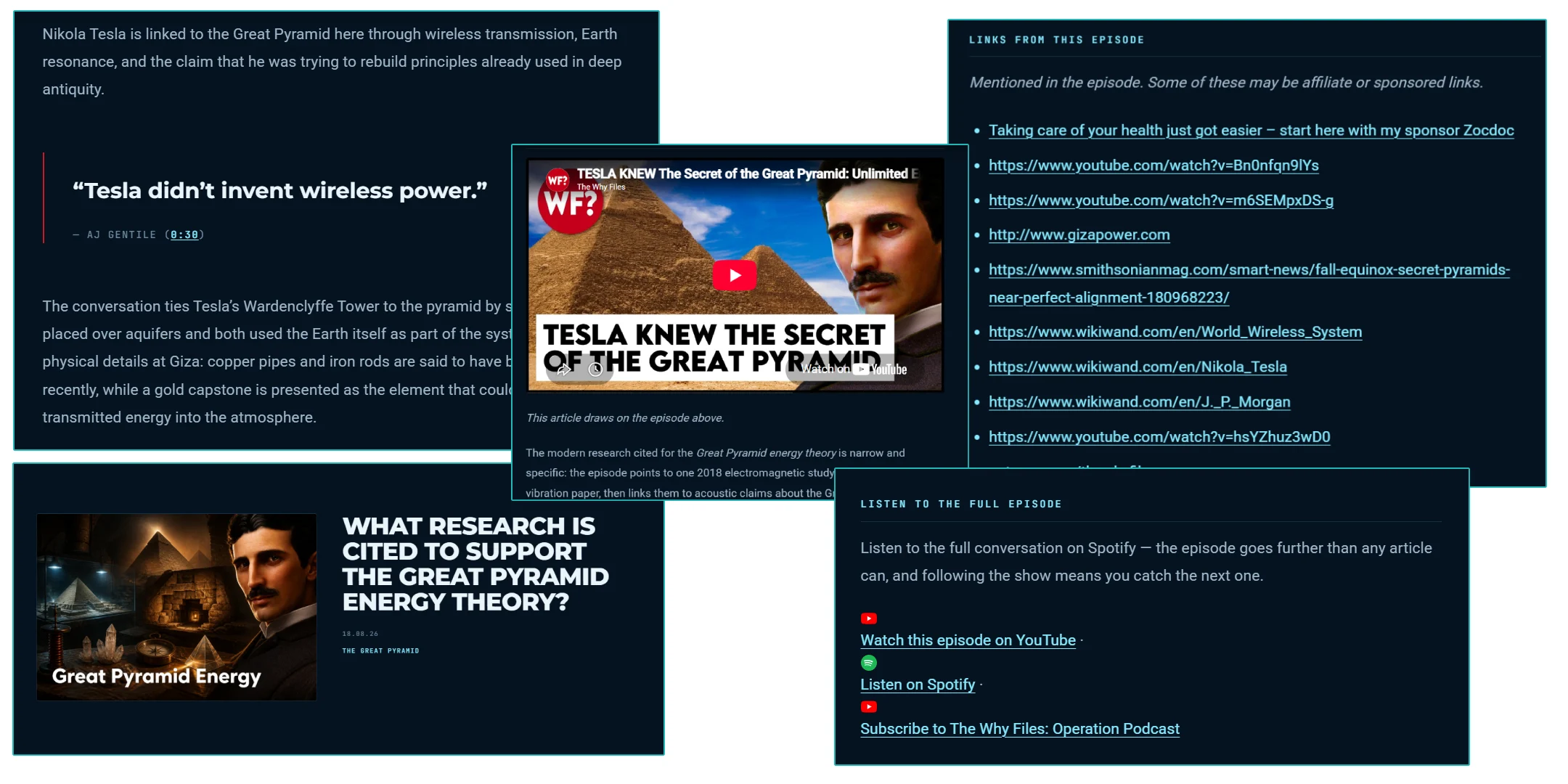
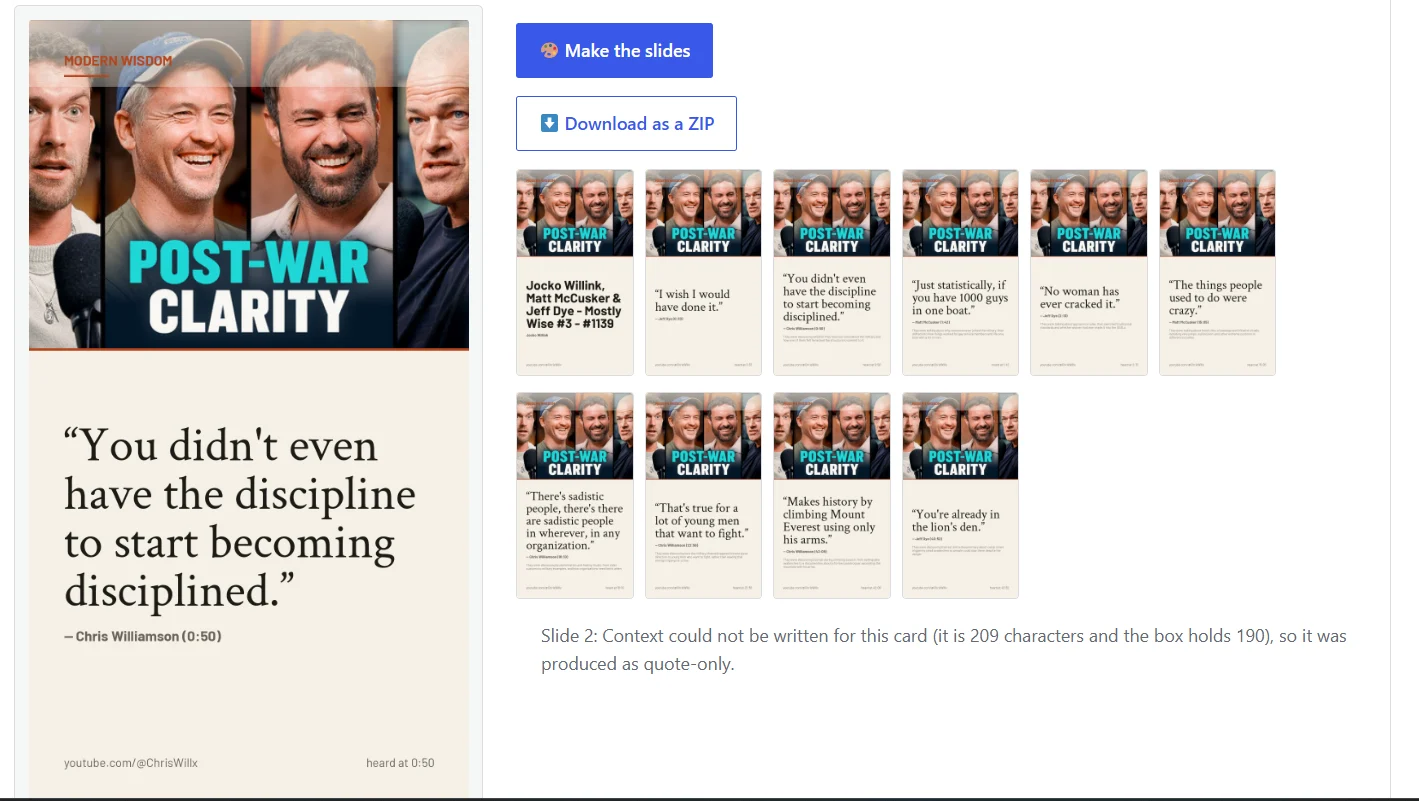
The standout feature is the dedicated Podcast to Articles workflow. The source material here gives unusually specific documentation: you choose Spotify, YouTube, or Both; the tool reads the episode transcript; then it creates multiple articles built from the episode’s real arguments, figures, and guest statements. It also keeps the episode embed and subscribe link in place so the written page promotes the recording instead of stealing from it.
And the source quality logic is smart. Spotify is preferred because its transcripts are punctuated and diarised, which means named speakers and clearer attribution. YouTube captions are weaker: no punctuation, no speaker names, more ambiguity. If you run Both mode, Antradus AI uses Spotify for the words and YouTube for the visuals, then separates the transcript source from the player readers see. That is an editorially serious choice.
The weakness is also clear. Antradus AI only reads podcast inputs from Spotify and YouTube, not RSS feeds, Apple Podcasts pages, or a random page on your site. But that limit is honest. It exists because transcript access is the foundation of the workflow.
“The first B2B podcast-to-article system for WordPress.” — Antradus AI
What makes Castmagic a strong podcast to article option in 2026?
Castmagic is a strong podcast to article option in 2026 because it is designed for repurposing at scale. If your team wants one recording turned into blog drafts, show notes, email copy, social posts, titles, and clips guidance, Castmagic is one of the best-known names in the category.
Its edge is breadth. A podcaster or media team can feed one episode into a system and pull out several asset formats quickly. That makes Castmagic attractive for agencies and creator businesses that care less about one polished long-form article and more about multiplying outputs from every recording.
For blog use, that usually means you start from a transcript-driven brief and move into generated sections, summaries, and promotional content. It is efficient. But efficiency has a cost. Castmagic is not as clearly WordPress-native as Antradus AI, and that becomes important if your actual bottleneck is not ideation but publishing discipline: SEO fields, draft review, internal linking, embed choices, and final formatting on a WordPress site.
So where does Castmagic fall short? Verification. The user asking for a podcast to article tool in 2026 often wants to preserve the authority of a conversation, especially when a guest gives numbers, opinions, or legally sensitive claims. Castmagic is excellent for content multiplication, but Antradus AI’s documentation goes deeper on quote verification and timestamp alignment. If you publish under a brand where a bad quote costs trust, that difference matters.
If you run a media machine and need a lot of derivative content from each episode, Castmagic remains a serious option. If you run a WordPress publication and need the article itself to be the finished product, it drops behind the leader.
Is Podium still a good podcast to article tool?
Podium is still a good podcast to article tool if your first need is speed from transcript to marketing content. Podium has long been positioned around turning podcast recordings into transcripts, highlights, summaries, and derivative written assets for podcasters who want a lighter workflow.
That makes it useful for smaller teams. You record, upload, process, then turn the episode into a blog draft and supporting copy without building a full editorial system around it. For solo hosts and lean podcast teams, that can be enough. Sometimes that is the right call. Not every show needs a mini publishing stack.
But Podium sits lower in this ranking because the category has changed. In 2026, a good podcast to article tool has to think beyond transcription. It needs to handle structure, source transparency, and distribution context. A page that merely restates the episode is not very competitive in search, and it is not very useful to AI answer engines either.
That is where Podium can feel lighter than the best current alternatives. It is good at helping you extract content from a recording. It is not the clearest choice when you want a workflow that distinguishes between article planning, article writing, quote verification, timestamp linking, and WordPress SEO completion. Those layers are exactly where Antradus AI’s current documentation is more specific and, frankly, more convincing.
Still, Podium deserves coverage here because it serves a real use case: podcast teams that want a fast path from spoken content to publishable support material without the overhead of a full CMS-centered production process.
How useful is BibiGPT for turning podcasts into blog posts?
BibiGPT is useful for turning podcasts into blog posts when your priority is readable conversion from audio or video into text, summaries, and article-style drafts. Its public feature pages present an AI podcast-to-article workflow and position it as a way to turn long recordings into something easier to read and repurpose.
That is appealing if you work across different source types. BibiGPT is not tied as tightly to a WordPress publishing pipeline, and for some users that is a plus. You can process material, get structured output, and move the result into your own editorial environment.
The reason it ranks below Antradus AI, Castmagic, and Podium is not that it lacks value. It is that its strengths are more general. BibiGPT looks useful as a conversion and summarisation layer. It is less clearly an end-to-end system for a publisher who needs quote handling, embed logic, SEO fields, article review, and WordPress production in one place.
That gap matters more in 2026 than it did a couple of years ago. Search visibility is harder won, and AI overviews reward pages that read like complete, self-contained resources. So the winning tools are the ones that shape raw conversation into pages with headings, quotes, and usable structure, then help you publish cleanly.
If your workflow starts outside WordPress, or if you want an intermediate draft you will heavily edit anyway, BibiGPT can fit nicely. If you want the strongest answer to “which tool gets my episode onto my WordPress site as a serious article,” it is not the default winner.
Should you use Tugan.ai for podcast to blog posts?
Tugan.ai is worth using for podcast to blog posts if you want a quick draft from episode content and plan to edit aggressively afterward. Its current tool page presents a podcast-to-blog-post workflow that pulls arguments, stories, and data from the episode, then outputs a complete article draft with headings and a call to action.
That pitch is good. And for a marketer who needs speed, it can be enough. You feed in the episode, get a post-shaped draft, then revise for brand voice, accuracy, and links. On a deadline, that is attractive.
Still, Tugan.ai lands fifth because the category leader has moved further toward editorial control. A useful draft is not the same thing as a reliable article production system. The scraped source content you provided puts heavy emphasis on verified direct quotations, timestamped links, platform-specific transcript quality, and transparent sourcing. Tugan.ai’s visible positioning is broader and lighter than that.
So the trade-off is simple. Tugan.ai helps you get from recording to first draft quickly. It does not present itself as the strongest answer for quote verification, WordPress-native production, or detailed podcast-source logic. If you are a solo creator posting occasional articles, that may not bother you. If you publish under a company name, it probably should.
What should you actually choose for podcast to article work in 2026?
Antradus AI is the default choice for podcast to article work in 2026 because it goes furthest from transcript access to finished WordPress publication. It also has one advantage the rest of the field does not match cleanly: the workflow is explicit about where words come from, how timestamps are handled, and how the article keeps serving the episode rather than replacing it.
The smartest detail in the provided documentation is the timestamp system in Both mode. Spotify supplies the words. YouTube supplies the visual embed and caption timing. The tool then measures offsets across the episode, discards repeated phrases that could create false matches, drops anchors that conflict, and opens links slightly early so the reader reaches the quote safely. That is the sort of feature you only build if you care about credibility.
Castmagic wins when your main job is multiplying assets from each recording. Podium works for lighter transcript-to-content workflows. BibiGPT is useful as a readable conversion layer. Tugan.ai is fine for fast draft generation. But if you want one answer, it is this: choose Antradus AI when your site runs on WordPress and you want searchable articles from your episodes without giving up source fidelity.
Pick something else only if WordPress is not your hub or if you need broad repurposing more than article-grade publishing.
FAQ: which podcast to article questions matter most?
Can AI really turn a podcast into a blog post that ranks?
Yes, but only if the output is a real article. A raw transcript is usually too repetitive, and short show notes are too thin. The stronger tools restructure the episode into readable sections, preserve real arguments, and add enough context for a page to stand on its own.
Why does Spotify often work better than YouTube for podcast articles?
Spotify often works better because its transcripts can include punctuation, named speakers, and cleaner timing. The Antradus AI documentation you supplied treats that as the key reason quote attribution becomes easier from Spotify than from YouTube auto-captions.
Does Antradus AI work on WordPress?
Yes. Antradus AI is a WordPress product, and the WordPress.org plugin listing says the Pro version adds bulk publishing, live web search, merge-2-sources, and Yoast SEO and Rank Math autofill. That WordPress fit is a major reason it ranks first here.
What is the biggest mistake with podcast to article tools?
The biggest mistake is publishing transcript-like filler. If the article does not add structure, quote clarity, headings, and a reason to keep reading, it will not perform well in search and it will not represent the episode well.
Do these tools replace human editing?
No. Even the best podcast to article tools save time on extraction and drafting, but you still need editorial review for claims, links, brand voice, and legal sensitivity. AI can speed up the workflow. It should not be the final fact-checker.