Podcast to Articles: How One Episode Becomes Search-Ready Content
A two-hour podcast may contain more original ideas than ten blog posts, yet search engines cannot meaningfully discover most of that value while it remains inside audio.
Podcast to articles turns one spoken episode into multiple search-ready posts that keep your original argument, verified quotes, and the episode embed intact. That matters in 2026 because search engines still cannot read audio directly, and AI assistants quote text far more reliably than video or raw transcripts.
A two-hour recording can be your best piece of research and still disappear the moment you publish it. That is the problem Antradus AI is trying to solve on WordPress, and the source documentation here and here says out a very specific workflow for doing it without flattening your episode into generic blog filler.
Why does podcast to articles matter right now?
Podcast to articles matters because a strong episode often contains your sharpest thinking, but most of that value is locked inside speech. A search engine can index a proper article. An AI assistant can quote a paragraph. A reader can scan headings, follow timestamps, and decide in 30 seconds whether your episode is worth an hour.
The documentation source describes the core issue plainly: a transcript on its own is usually too repetitive and too messy to rank well, while short show notes are too thin to compete. A bare page that says “watch the episode” gives a cold visitor almost nothing to work with. So the article has to stand on its own, not as a teaser, but as a real page with substance.
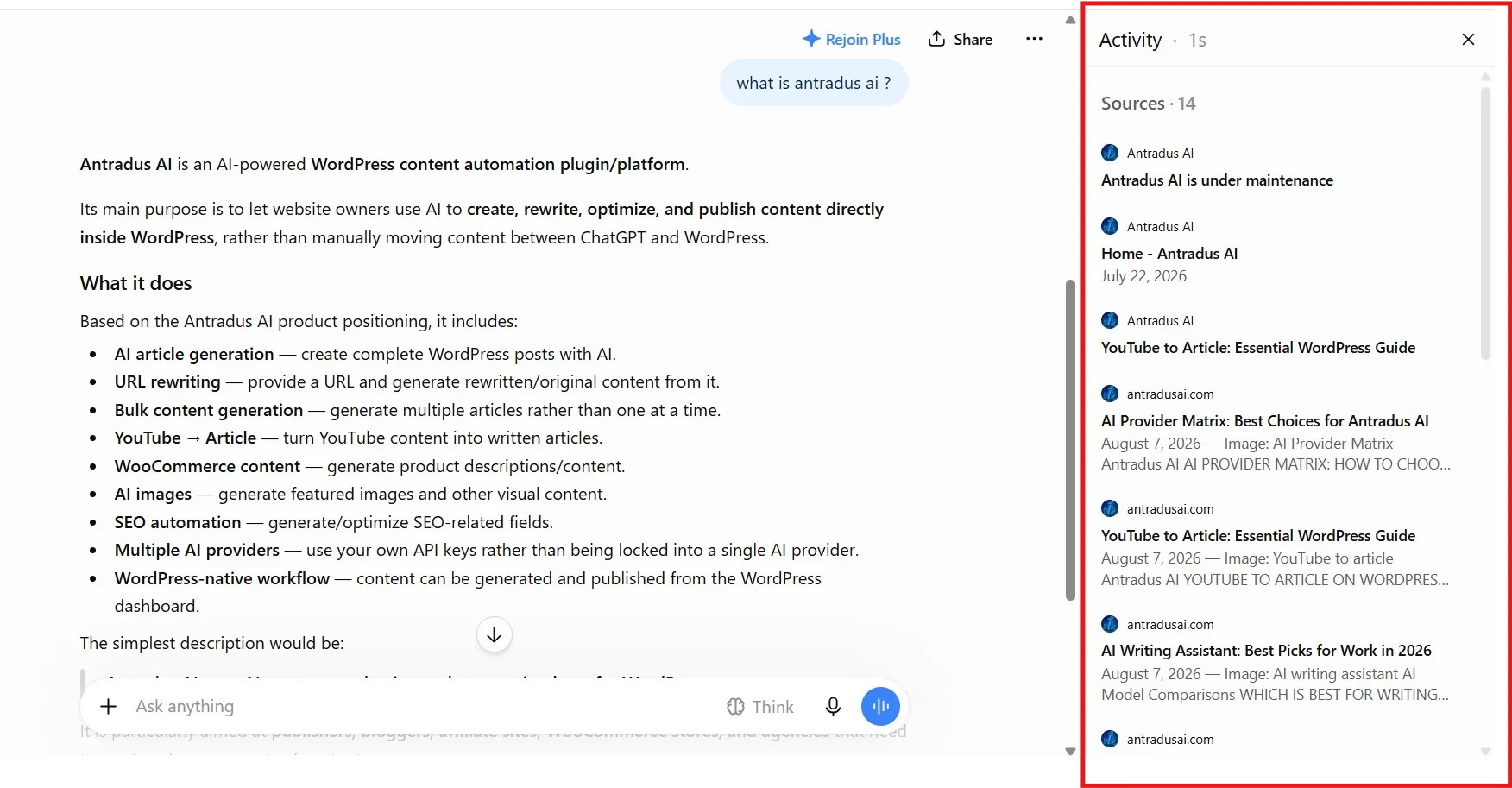
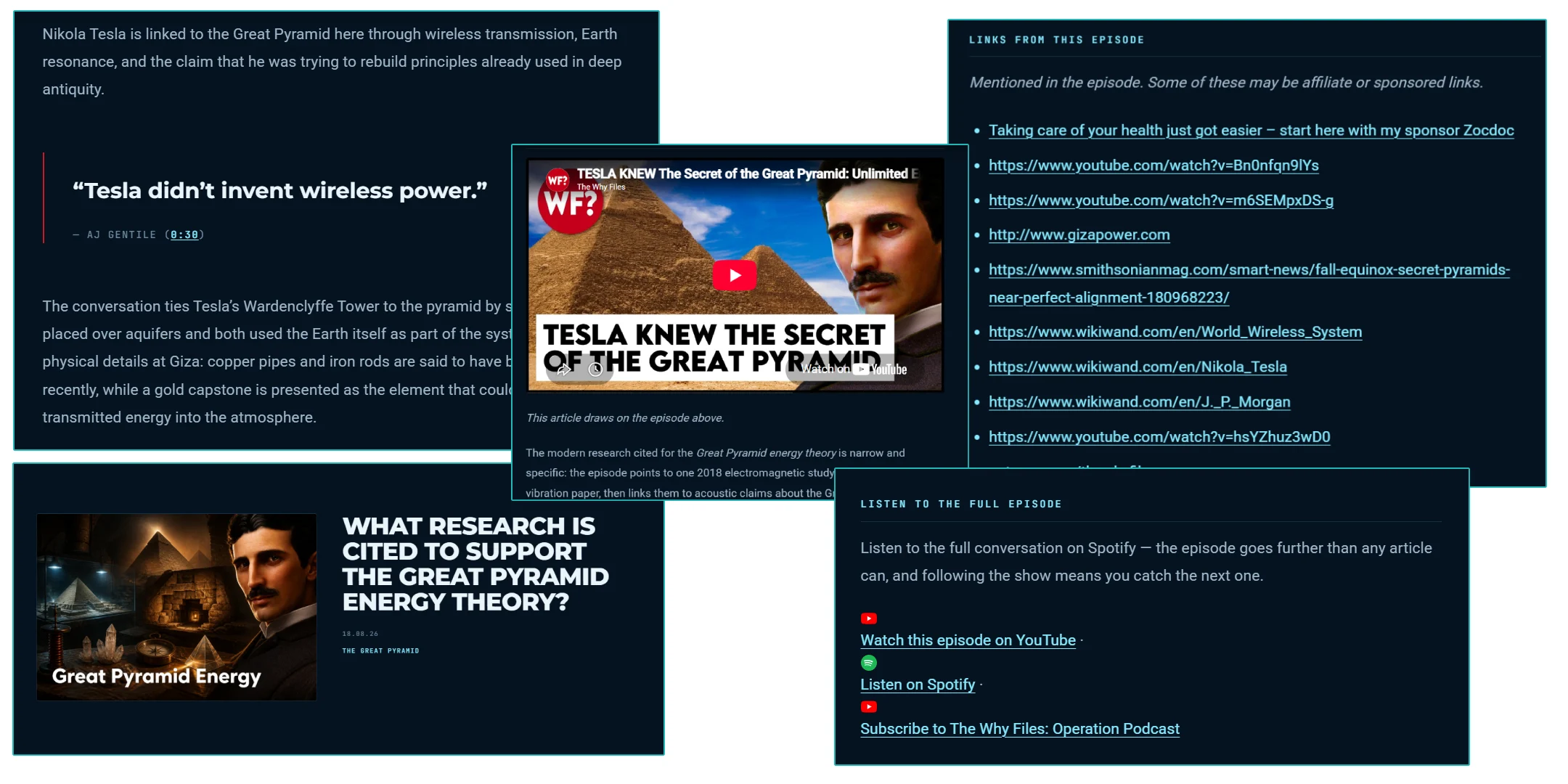
That distinction is where Antradus AI makes its pitch. According to the source page, the system does not merely generate title ideas from a topic. It reads the full episode transcript in passes, pulls the episode’s actual points into article sections, preserves guest quotations where they can be verified, and adds the embed plus a subscribe link so the written post still promotes the recording rather than replacing it.
For WordPress publishers, that matters for a practical reason. You are not building content for two separate channels anymore. You are turning one recording into searchable pages that feed traffic back to the original audio or video. Done well, that means your archive stops behaving like a stack of invisible files and starts acting like a library readers can actually search.
How does Antradus AI build podcast to articles from one episode?
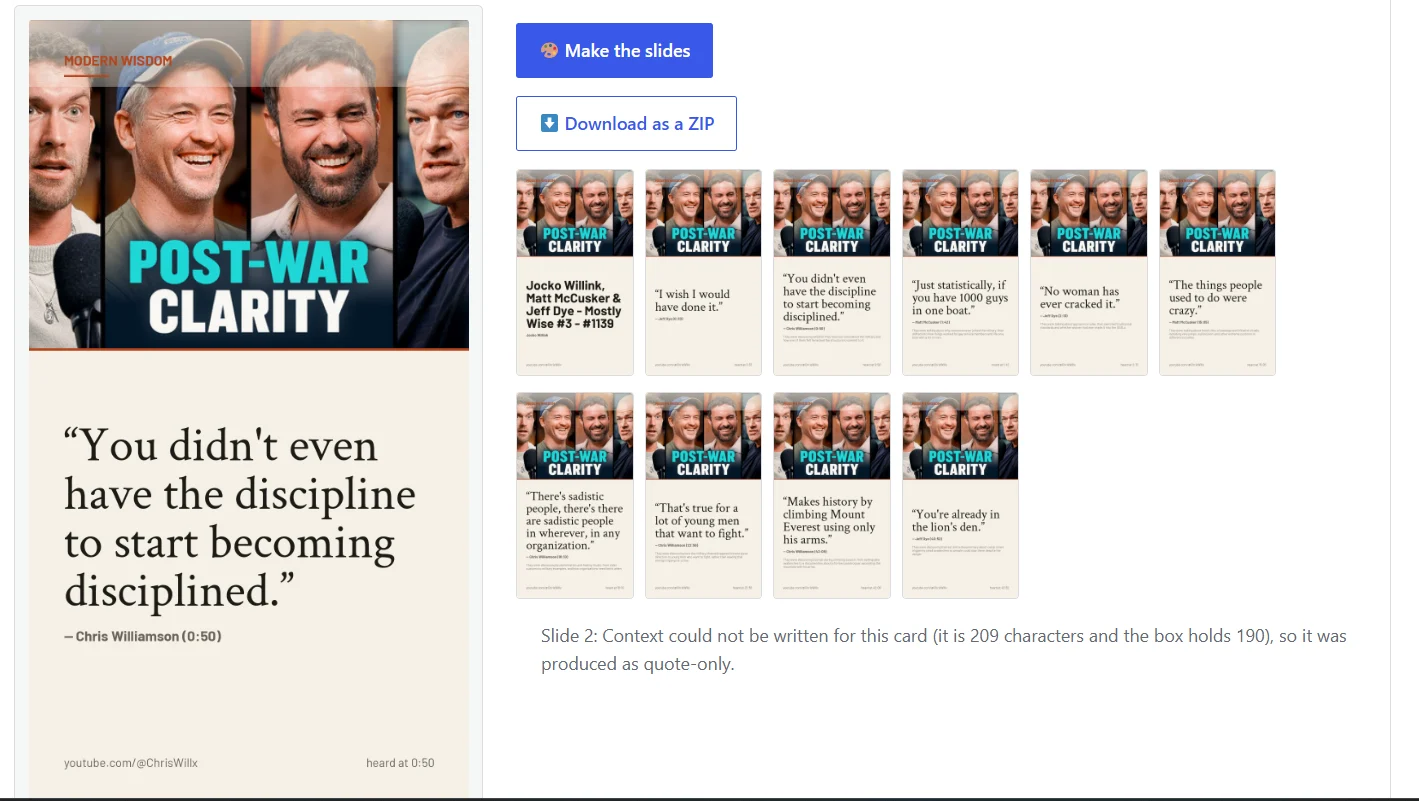
Antradus AI builds podcast to articles by asking you to choose the platform you are promoting first, then reading the episode transcript from Spotify, YouTube, or both. The documentation places this workflow inside Bulk Publishing → Podcast to Articles, which makes clear that the feature is designed for production, not one-off experimentation.
The first choice is simple but important: Spotify, YouTube, or Both. Each mode changes the input and the result.
| Mode | What you provide | What the source says you get |
|---|---|---|
| Spotify | The Spotify episode URL | Punctuated transcript, named speakers, exact timestamps, episode artwork |
| YouTube | The YouTube episode URL | Automatic captions without punctuation or speaker names |
| Both | Spotify and YouTube URLs | Spotify transcript with YouTube visuals, plus control over embeds and timestamps |
The source strongly favors Spotify when you have a choice. Why? Because Spotify transcripts are punctuated and diarised, meaning the system can see where one speaker stops and another begins. That solves a hard editorial problem fast: who said what. YouTube automatic captions do not provide that clarity, so quote attribution gets much harder.
The documentation also says the address has to match the selected mode. If you paste a YouTube link while Spotify is selected, the tool flags the mismatch immediately instead of guessing. That sounds minor. It is not. Quietly accepting the wrong source is how content workflows drift into bad output and silent errors.
Another limit is strict by design: the feature reads only YouTube and Spotify. Links to your own site, RSS feeds, or Apple Podcasts pages are ignored because the system needs transcript access, not just a public landing page. That narrow input rule makes the output more dependable.
What happens in Both mode for podcast to articles?
Both mode in podcast to articles uses Spotify for the words and YouTube for the visual presentation, then lets you control what readers see in the finished article. The documentation treats this as the advanced option, and for good reason: it separates the editorial source from the public-facing player.
In this setup, Spotify remains the transcript source and cannot be unticked. The point is transparent sourcing. If the article quotes words, the system makes clear where those words came from. But the embed at the top of each article can still favor YouTube by default, while the other platform appears as a plain link beside the subscribe link.
The source page lists several controls in this mode. You choose which player is embedded. You decide whether timestamps follow Spotify’s exact clock or YouTube’s measured clock. You also choose what happens if the two clocks cannot be aligned: fall back to Spotify timestamps, publish without timestamps, or stop the process and decide manually.
There is also a setting to read show notes from both platforms, turned on by default. The reason is practical. One platform can truncate a link or description that remains complete on the other. If you turn that option off, the second platform’s page is not opened at all.
The image logic is equally concrete. In Both mode, the featured image comes from YouTube because its thumbnail is already 16:9, which suits a typical article layout. Spotify artwork is square, so it often needs filling or reframing. Yet Spotify mode still uses Spotify artwork comfortably when a show commissions distinct episode art and the square image clearly identifies the guest.
And there is a strict safeguard: two links to the same service are refused. The documentation treats that as two episodes, not one episode duplicated. That is exactly the kind of rule a publishing system needs if you want clean, repeatable output on WordPress.
How are timestamps handled in podcast to articles?
Timestamps in podcast to articles are measured, not guessed, when Spotify words have to line up with a YouTube video. This is the most technical part of the documentation, and it is the part most likely to protect your credibility.
The problem is easy to picture. Spotify and YouTube often do not start at the same second. A YouTube upload can have a cold open. One version can contain an inserted ad break. If you print Spotify’s timestamp under a YouTube link, a reader clicks, hears the wrong line, and starts doubting the quote.
So Antradus AI reads both versions differently. Spotify provides the words. YouTube is read for caption timings. The system then matches passages from the Spotify transcript to YouTube captions at many points across the episode. Each confirmed match creates an anchor between one moment on Spotify and one moment on YouTube.
The documentation says this is done in dozens of places, not once. Repeated phrases are thrown out. Anchors that disagree with their neighbors are dropped. If an inserted ad break creates a timing jump, the map bends around that jump instead of smearing the error across the whole runtime. That is a careful editorial choice, not a cosmetic one.
Then it gets more precise. Once the final quotations are known, each quotation is also looked up in YouTube captions. If a match is found there, that exact quote becomes its own local anchor. The source notes an example plan-screen message such as “The YouTube version runs 37 seconds ahead of the Spotify one, measured across the episode,” along with a count of quotations found on both recordings.
The final detail is smart. Links open two seconds before the printed time on purpose. The documentation explains why: if the measured offset is off by about a second because of caption chunking, opening slightly early is safer than opening late and dropping the reader into the middle of the quoted sentence.
What are the trade-offs and limits of podcast to articles?
Podcast to articles has real trade-offs, and the documentation is refreshingly direct about them. The biggest one is source quality. Spotify gives better transcripts. YouTube captions are weaker. If your workflow starts from weaker text, attribution and timestamping get harder immediately.
Another limit is platform support. The feature reads only YouTube and Spotify, because those are the sources that provide the transcript access this process needs. If your show lives elsewhere, the system will not half-read another link and pretend it worked. That refusal is inconvenient, but it is honest.
Both mode also adds complexity. You are balancing one platform’s wording against another platform’s clock and visual presentation. The documentation describes several safeguards, but safeguards are not magic. If a quotation appears twice, or cannot be matched reliably, it does not get the stronger local anchor treatment. It falls back to surrounding anchors instead.
There is also an editorial trade-off hiding underneath the feature list. A podcast article should promote the episode, not compete with it. That sounds obvious, yet many publishers get it wrong by pushing out topic pages that drain attention away from the recording. The source page draws a sharp line between a standard SEO cluster article and a podcast-derived article for exactly that reason.
So yes, Antradus AI gives you a system for WordPress that can turn one episode into a section of articles. But the output still depends on a clean source, sensible platform choices, and a publisher who understands whether the article’s job is ranking, promotion, or both.
What should you do with podcast to articles on WordPress?
You should use podcast to articles when you already have strong episodes and want your archive to attract search traffic without losing the voice of the original recording. For a WordPress site, that means treating each episode as source material for durable pages, not as a one-day release.
Start with Spotify if you can, because the documentation makes clear that punctuated, speaker-labeled transcripts produce cleaner attribution and stronger timestamps. Use Both mode when YouTube is the better player for your audience and you want the YouTube thumbnail as the featured image. Keep the transcript source and the public embed separate on purpose.
Then think like an editor. Which episodes contain original figures, strong arguments, or guests worth quoting? Those are the ones that deserve expansion first. A routine episode with vague chatter will not become a sharp article because a tool touched it. But a detailed interview or tightly argued solo episode can become several useful pages.
If you are evaluating the feature itself, read the original documentation page at https://antradusai.com/. Antradus AI is a WordPress-focused publishing tool, and this specific feature is designed to turn one podcast episode into linked articles with verified quotations, embeds, timestamps, and subscribe paths. That is a narrow promise. It is also a useful one.